
Show summary Hide summary
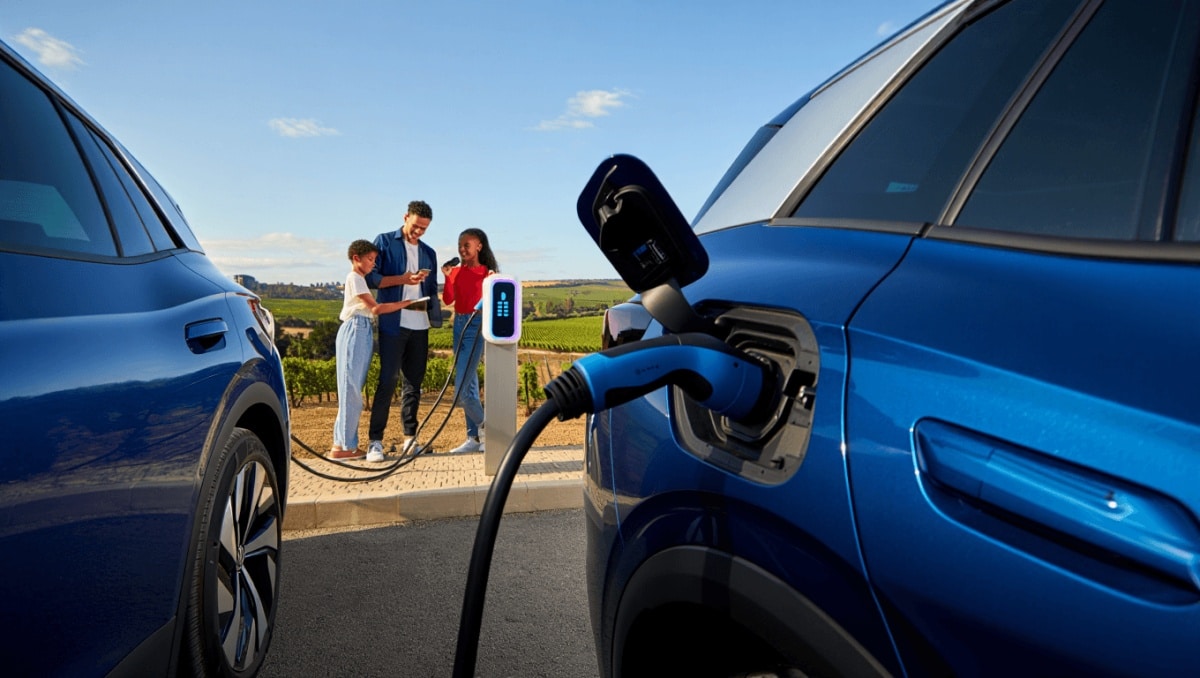
We drove from Cherbourg to Montauroux in a second‑hand Volkswagen ID4 this summer to see whether a family trip to the south of France is practical in an electric vehicle. The journey confirmed France’s strong charging infrastructure but also exposed practical hurdles — from app fragmentation to a surprise heatwave that changed the math on range and comfort.
Why we chose to drive
With two teenagers and a dog, flying felt less convenient than taking the car. We planned a June holiday near Nice, where average temperatures are about 26°C, and did not expect extreme heat.
Our commuter SUV was 14 years old and had broken air conditioning, so we traded it in for a used VW ID4 with an estimated range of roughly 450–500 kilometres.
Route and charging routine
The trip covers about 1,250 km and is roughly 12 hours of driving without stops, so we split the journey with an overnight stay en route. We anticipated needing to charge every 300–350 km and decided not to let the battery fall below 100 km as a margin for peace of mind.
In practice, range anxiety proved unnecessary. The motorway network in France is dotted with charging hubs — typically every 75–100 km — and we rarely waited for a connector.
Many of the motorway stations feature high‑power chargers (up to around 400 kW), which can bring the car back to a usable level in about 30–40 minutes. Smaller chargers at supermarkets are common too, usually around 50 kW, with some reaching 150 kW.
Apps, costs and payment
Managing payments and access turned out to be the most fiddly part of the trip. Rather than relying on just two providers, we used several charging apps during the journey — including Ionity, TotalEnergies and Zunder.
Some operators offer subscription plans with lower per‑kWh rates. For example, Ionity charged about €0.44 per kWh with a €5.99 monthly subscription. Other high‑speed networks typically billed between €0.50 and €0.58 per kWh.
For comparison, recent price changes in Ireland mean ESB’s pay‑as‑you‑go rates are roughly €0.64–€0.66 per kWh for slower chargers and about €0.73 per kWh for faster ones.
All apps required payment details and an address to speed up transactions. When a charger briefly failed to start on one occasion, the station’s helpline located our session and remotely released the cable within minutes.
Where chargers are scarce
Coverage was excellent on motorways and larger national roads, but outside those corridors — notably around Cherbourg — the fastest chargers were less common. Supermarket points were available there, but they tended to be slower.
Heat, hills and hidden drains
Two factors noticeably increased energy use: gradients and air conditioning. Climbing hilly stretches demands more power, and driving faster on motorways raises consumption compared with a steady, lower speed.
On the return leg we encountered a heatwave and decided to leave a day early. Temperatures on the road ranged from about 38°C to 42°C, so we ran the air conditioning continuously to keep the family and dog safe and comfortable. That, predictably, required more frequent charging.
Another overlooked consequence of high temperatures was the effect on phones. Mobile batteries depleted faster in the heat just when we needed them to operate charging apps, which created an extra layer of worry.
Tolls and final bill
Tolls across France remain expensive and apply equally to petrol, diesel and electric cars. There is no general discount for EVs on those autoroutes.
Our outlay for the trip was as follows: charging costs for the round trip came to €269, while tolls totalled €257. For context, a fuel‑only estimate for the same journey would have been about €308.
Takeaways
Driving an electric car from north‑west France to the Côte d’Azur is entirely feasible for a family. The network of fast chargers makes long distances manageable, and customer support at stations is generally responsive.
However, plan for multiple charging apps, be mindful of top‑up strategy on hilly stretches, and factor in weather. A summer heatwave can change range calculations and your comfort needs very quickly.
Apps used
- Ionity
- TotalEnergies
- Zunder