Show summary Hide summary
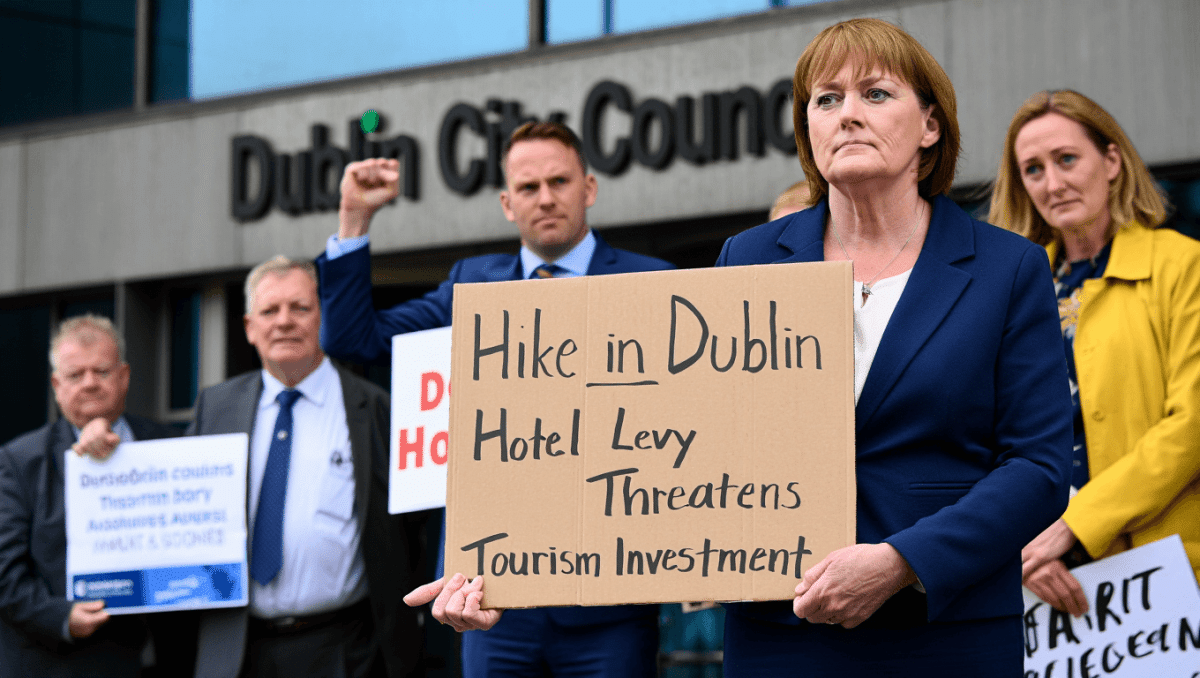
Dublin City Council has approved a rise in the development contribution for new hotels, tourist hostels and aparthotels, a move the Irish Hotels Federation (IHF) says will significantly increase upfront costs and threaten planned projects across the country. The levy, which takes effect on 1 July 2026, almost doubles the charge for new accommodation in the capital.
How much more will developers pay?
The council set the new rate at €244 per square metre for qualifying accommodation developments. That works out to an extra charge of about €2.5 million on a 20,000 square metre scheme, raising the total contribution to roughly €5 million.
Hotel sector reaction
The IHF said the increase sends a troubling message to investors at a sensitive time for the industry. Paul Gallagher, the federation’s chief executive, warned the move “sends the wrong signal at the worst possible time.”
He and other industry representatives argue that higher upfront levies will add to already steep development costs and could delay or cancel projects that would expand visitor accommodation.
Development pressures and stalled projects
The federation points to mounting financial pressures on hotel building. In research published earlier this year, it found that about 45% of operators planning to add rooms have put those schemes on hold. Factors cited include rising construction costs, tighter access to finance, planning delays and slow utility connections.
Implications for national tourism goals
Independent analysis prepared for the tourism sector this year estimates Ireland faces a shortfall of between 10,000 and 15,000 bedrooms by 2031 unless new capacity is delivered.
That gap matters for national policy. The government’s National Tourism Policy Statement, A New Era for Irish Tourism, published in December 2025, sets a target of growing overseas tourism revenue to €9 billion by 2031 and commits to a dedicated Tourism Accommodation Strategy to secure suitable rooms across the regions.
The IHF says measures that make building in Dublin more expensive will ripple beyond the capital. Dublin is the main entry point for many visitors, the federation notes, and constrained investment there could limit tourism growth and job creation nationally.
Calls for reconsideration
Gallagher said the federation wants to work with the council and the government to expand tourism in a way that benefits both city and country. He urged Dublin City Council to rethink the increase, arguing it conflicts with national objectives and Dublin’s longer-term interests as a destination.
The council’s decision stands for now, with the new contribution due to apply from 1 July 2026. The IHF has signalled it will press for dialogue to find alternatives that support investment while addressing local funding needs.