Show summary Hide summary
Anja Zauers explores why ordinary objects — from postcards to vinyl and collectible toys — continue to hold deep personal meaning, and how that impulse to keep things has shifted in recent years. Her piece examines the emotional role of keepsakes, their links to wellbeing, and why physical items still matter in a digital age.
Why small things feel so big
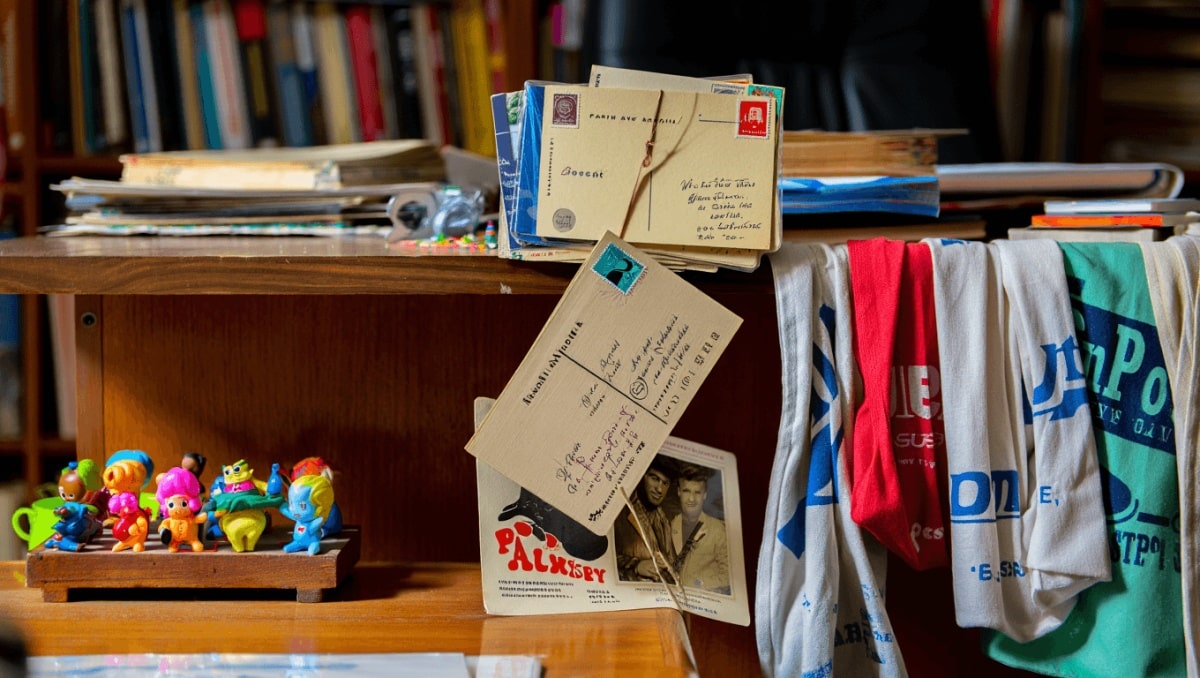
Many people pick up a postcard, magnet or ticket and bring it home not for its monetary value but for the connection it preserves. Such objects act as anchors, quietly carrying memories of places, people and moments.
Funeral plans announced after Dublin gig death of Westlife fan
Search under way after air ambulance loses radar contact
According to counsellor and psychotherapist Lisa Stewart, collecting is less about the items themselves and more about the feelings attached to them. She says objects can hold experiences, relationships or parts of our identity we fear losing, and that this gives them lasting emotional significance.
Memory, the body and sensory recall
Memories do not exist as neutral facts alone; they are entwined with bodily sensations and emotions. Stewart notes that familiar textures, smells or weights can immediately bring back feelings in a way scrolling through photos often does not.
That sensory link helps explain why a creased postcard or a worn ticket can prompt a vivid recollection. In short, tangible items serve as memory triggers that engage more than just our visual memory.
When collecting helps — and when it doesn’t
Objects can support mental wellbeing, but intention matters. Stewart draws on the work of A. H. Almaas to distinguish collecting that springs from genuine connection versus behaviour that tries to fill a felt lack.
When the motive is connection, collecting can bring comfort, continuity and a stronger sense of self. If it stems from anxiety, comparison or a desire to satisfy others, it may only temporarily soothe distress and can mask underlying needs.
Trend-led fandoms and community
Social media has boosted popularity for items such as Sonny Angels, Jellycat toys and Pokémon figures, and displays of collectible toys — for example in POPMART’s flagship stores — illustrate that momentum. Stewart suggests these trend-driven collections can offer nostalgia and belonging, but she also encourages collectors to ask who they are being while they collect.
In other words, does acquiring items create genuine joy and social connection, or is it responding to pressure, status signals or short-lived trends?
Physical keepsakes in a digital world
As more of life moves online, there is renewed appetite for things that can be touched and displayed. Stewart points out that therapeutic approaches such as Compassionate Inquiry emphasise the body’s role in healing, and physical objects can help ground attention in the present.
Analogue pursuits — from journaling to playing vinyl or using film cameras — share this quality. They invite a slower, more tactile engagement that contrasts with the constant outward pull of digital life.
What collecting ultimately gives us
Whether small or conspicuous, keepsakes tend to represent continuity: the people we love, places we’ve been, and moments we don’t want to lose. Their value is not intrinsic but relational; it lives in the meaning we have woven around them.
For the author, a souvenir postcard is therefore more than a memento. It is a tangible reminder of a moment and the feelings it carries — and that, she argues, is at the heart of why collecting persists.
The views expressed here are those of the author and do not represent the views of RTÉ